

Melasma Treatment in Fort Worth: What to Ask
lsmat9Oct 268 min read
Melasma treatment is rarely one product or one visit. The patches can sit on the cheeks, forehead, upper lip, or nose, and they often darken after sun, heat, or a hormone change. A useful plan starts by confirming the pattern, naming the triggers you can change, and choosing care that fits how deep the pigment sits.
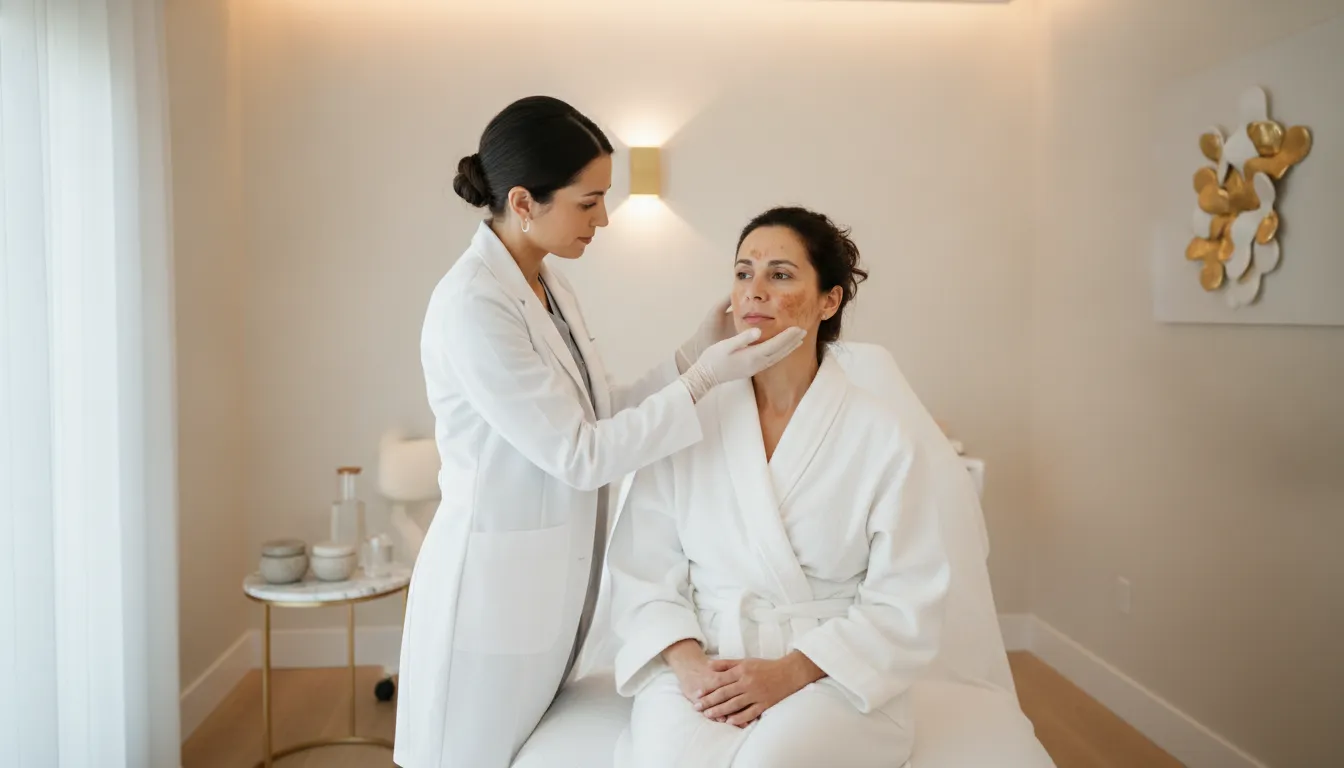
Request a skin consultation in Fort Worth so a provider can look at the pattern before you choose a peel, a facial, or another in-clinic visit.
At Artisan MedSpa, Laser & Wellness, skin concerns such as melasma are part of the aesthetic services discussed in person at the Harris Parkway office. Who performs each surface treatment is confirmed at the visit, not assumed from a job title. A clinician still has to decide whether a patch is melasma, and whether an in-clinic service is appropriate for your skin.
What melasma treatment is trying to improve
Melasma is a pigment pattern, not a stain you can scrub off. Skin cells called melanocytes make extra melanin, and that pigment can sit in the surface layers, deeper layers, or both. The American Academy of Dermatology notes that a close look, sometimes with a Wood's lamp or dermatoscope, helps show how deep the color goes. That depth changes which options are even worth discussing.
People usually notice symmetric brown or gray-brown patches. Common places are the cheeks, forehead, bridge of the nose, and the skin above the upper lip. The color may look worse in summer or after a week outdoors. It can also look worse after heat, even when you wore sunscreen.
Triggers vary. Sunlight is the one almost every plan has to address, because UV light tells the skin to make more pigment. Pregnancy, birth control pills, and other hormone shifts are frequent contributors. Some medicines and family history matter too. Stress is sometimes part of the story. None of those facts replaces an exam, because other conditions can look similar.
Melasma is not skin cancer, and it does not damage internal health. It can still be frustrating, especially when makeup only covers it for a few hours. Some patches fade when a trigger ends, such as after pregnancy or after a medicine is stopped under a prescriber's guidance. Others last for years. Treatment aims to calm new pigment and fade what is already there. It does not promise a permanent erase.
How a clinician decides on melasma treatment
The first visit should answer a simpler question than "which peel is strongest." Is this melasma, and what is driving it right now? Bring a list of medicines, including birth control or hormone therapy, recent sun or heat exposure, and any prior light or peel treatments. Mention if you scar darkly or if pigment has worsened after a facial.
According to the American Academy of Dermatology, diagnosis is often visual. A Wood's lamp or dermatoscope can show depth. A small skin biopsy is sometimes used when the pattern could be something else. Those steps are clinical judgments, not a menu you pick from online.
Ask what the exam showed in plain language. Surface pigment and deeper pigment do not respond the same way. Also ask which of your triggers are realistic to change. Stopping a needed medicine is not a cosmetic decision. A good consult separates skincare habits from medical choices and tells you which part Artisan can help with in the office.
Artisan lists these visits on its aesthetic services page, and the plan is consultation-based. The practice does not post a fixed melasma protocol, a series length, or a price. Expect the recommendation to depend on your skin tone, the depth of the color, and how your skin has healed before. If the patch might be another condition, ask whether you should see a board-certified dermatologist before any procedure.
Sun protection is part of melasma treatment
No in-office visit works well if daylight keeps stimulating new pigment. Dermatologists commonly recommend a wide-brimmed hat, shade, and a broad-spectrum sunscreen of SPF 30 or higher, reapplied through the day. Visible light matters too. Many clinicians suggest a tinted sunscreen with iron oxide because it covers more than UV alone and avoids the white cast that makes people skip product.
Heat is a separate trigger. A long drive in a hot car, a workout in direct sun, or a sauna can darken patches even when you have applied sunscreen. That does not mean you must avoid Fort Worth summers entirely. It means you plan outdoor time, reapply, and tell your provider if color rebounds after heat.
Daily habits belong in the same plan. A gentle cleanser, a moisturizer your skin tolerates, and a pause on harsh scrubs reduce irritation. Irritated skin can make pigment look worse. If you already use a prescription cream from a dermatologist, say so. Do not stack a new acid or peel on top without asking both clinicians how they fit together.
In-clinic options you can ask about
Artisan's aesthetic services page lists facials, chemical peels, microneedling with or without additives, and dermaplaning. The homepage also names melasma among skin discoloration concerns. Those are advertised services, not a promise that each one treats melasma, and not a laser menu. The practice is not promoting laser hair removal or a specific laser skin protocol in this guide, because those services are not confirmed as current offerings.
Chemical peels use a solution on the skin to lift excess surface cells. For pigment, the goal is gradual evening of tone, not a deep peel on the first visit. Strength, downtime, and whether a peel is appropriate depend on your skin. People who develop dark marks after inflammation need a slower plan.
Microneedling creates tiny channels in the skin. As the skin heals, tone can look more even for some people, especially when it is paired with sun protection and a topical plan from a qualified prescriber. It is not a cure, and it is not right for every face. Active irritation, a recent tan, or a history of poor healing are reasons to wait.
Facials and dermaplaning are surface services. A facial can support a calm routine. Dermaplaning removes fine vellus hair and dull surface cells. It is not a treatment that clears melasma by itself. If discoloration is your main concern, say that at booking so the visit is an assessment, not only an exfoliation. Read the separate dermaplaning guide if you want the questions specific to that service.
Light-based care is a separate question. Artisan's skin repair page describes IPL, or intense pulsed light, for red marks, dark spots, and other discoloration. That page is not a melasma protocol. The same light that fades a sun spot can inflame melasma and leave darker patches, especially after a recent tan or on skin that pigments easily. Ask whether IPL fits your pattern at all, how many visits might be considered, and what you should do if the color darkens. A Foto Facial overview covers how clinics use that label. It does not mean every light treatment is right for melasma.
Option to discuss
What it may address
What to confirm first
Sun protection plan.
New patches and darkening of existing ones.
Use SPF 30 or higher, a tint if advised, and a hat for midday sun.
Chemical peel.
Surface pigment, chosen case by case.
Confirm skin tone, peel strength, downtime, and prior dark marks.
Microneedling.
Tone that may even as skin heals.
Ask whether additives are used, the series length, and healing history.
Facial or dermaplaning.
Texture and dull surface cells, not a melasma cure.
Confirm that discoloration, not only smoothness, is the visit goal.
IPL, if you are a candidate.
Some discoloration. Not a default melasma treatment.
Ask about skin tone, recent tan, rebound risk, and visit count.
Prescription topicals.
Excess pigment, when a prescriber recommends them.
Ask who prescribes them and how they fit any in-office visit.
Prescription creams are often the backbone of medical melasma care. Hydroquinone, tretinoin, a mild corticosteroid, azelaic acid, kojic acid, and vitamin C are examples dermatologists discuss. Some people later use tranexamic acid as a cream or a pill when other care has not been enough. Artisan does not publish those medicines as a take-home melasma kit. If you need a prescription, ask whether that comes from your dermatologist or another clinician, and bring the instructions to your aesthetic visit.
What results and downtime can look like
The Academy of Dermatology says results often take 3 to 12 months when a plan is followed, and longer if the patches have been present for years. A single peel or facial is not a fair test. Fading is usually uneven at first. One cheek can improve while the upper lip lags. Color can return after a beach weekend or a skipped sunscreen week.
Downtime depends on the service. A gentle facial may leave little visible change in routine. A peel can cause redness, flaking, or tightness for days. Microneedling can leave temporary redness. None of these is "painless" or "no downtime" for every person. Bruising is uncommon with surface treatments but swelling and sensitivity are possible. Tell the provider about blood thinners, recent isotretinoin, pregnancy, or a history of cold sores or keloids before you book a procedure.
Risk is part of the consent conversation. The wrong peel or light treatment can darken pigment, especially on skin that already makes extra color after irritation. That is why "stronger" is not the same as "better." Ask what the provider will do if color worsens, and how soon you should call.
Cost is individual. Artisan does not publish a melasma treatment rate, a package price, or a membership that covers these visits. Insurers often treat pigment care as cosmetic, so plan on asking for a consult quote rather than assuming coverage. The only published dollar amounts on the policy page are a $50 late-cancel fee and a $50 no-show fee. Those are scheduling charges, not treatment prices.
Questions to bring to a Fort Worth visit
A short list keeps the consult concrete and saves time in the room. You do not need to arrive with a brand of peel or a device name already picked out.
Does this pattern look like melasma, or should a dermatologist confirm it first?
Does the pigment look mostly on the surface, or deeper?
Which of my triggers, such as sun, heat, or a hormone medicine, matter most?
Which in-clinic service, if any, fits this pattern, and which should we avoid?
How many visits are typical for someone with skin like mine, and what does aftercare include?
How will we protect the result through a Texas summer?
Also ask who performs the service you are considering. Dr. Ramin R. Samadi is the medical director and performs the injectable services the practice assigns to him. Do not assume he performs facials, peels, microneedling, dermaplaning, or every other treatment in the building. Ask at the visit which provider will do the service and what credentials that person holds.
If you are comparing light-based care with peels, keep those as separate questions. A foto facial discussion is about a device and your candidacy. A melasma discussion is about pigment depth, triggers, and a plan you can maintain. Mixing them into one promise of "laser for brown spots" skips the assessment.
If you are ready to talk through your patches, call 817-423-5400 or send a note through the contact form. The office is at 6015 Harris Parkway, Suite 110, Fort Worth, TX 76132.
Frequently asked questions
What is the best melasma treatment?
There is no single best treatment. The American Academy of Dermatology says the most effective plans usually combine sun protection with topical medicine, and sometimes a procedure. The right mix depends on pigment depth, skin tone, and triggers. A consult is how you find out which part applies to you.
Can I remove melasma at home?
Home care can support a plan. Daily shade, a wide-brimmed hat, and broad-spectrum SPF 30 sunscreen are the steps dermatologists emphasize. Over-the-counter acids and scrubs do not replace an exam, and harsh products can irritate skin and darken patches. Hydroquinone is no longer sold without a prescription.
How long does melasma treatment take to show a change?
Visible change often takes months, not days. The Academy describes a typical window of 3 to 12 months when the plan is followed, and longer for long-standing patches. A rebound after sun or heat is common. Maintenance is part of treatment, not a sign that the first visit failed.
Does Artisan treat melasma with laser?
The site names melasma among discoloration concerns and lists peels, microneedling, facials, and dermaplaning. It does not publish a current laser device or a laser protocol for melasma. Ask at your visit what is actually offered. Do not book expecting a specific laser service.
Will insurance pay for melasma treatment?
Often it does not. The Academy notes that melasma care is usually not considered medically necessary, so many insurers do not cover it. Artisan does not publish treatment prices. Ask for the consultation and any recommended service to be quoted before you commit.