


Fort Worth Patient Guide: Neck Bands Treatment
Visible vertical bands can make the neck seem more prominent than a person would like, but the right next step depends on what is causing them and on an individual’s health and goals. If you are researching neck bands treatment in Fort Worth, begin with an assessment rather than assuming that one injection or technique suits everyone. A consultation can help clarify whether the bands appear related to platysma muscle activity, skin changes, or a combination, and what options merit discussion.
What are visible neck bands?
The platysma is a broad, thin muscle that extends across the front of the neck. In some people, portions of this muscle become more visible as vertical cords, especially when the muscle contracts. The appearance can vary at rest and with movement. Skin quality, anatomy, age-related changes, and other individual factors may also affect how the neck looks. A photograph or a brief online description cannot establish the cause for a particular person.
It is useful to distinguish a visible band from loose skin, horizontal creases, fullness under the chin, or a change that is new, painful, or otherwise concerning. These issues can look similar to a patient but may call for different evaluation. A clinician should hear what you notice, when it appears, whether it changes with expression or movement, and what outcome you hope for before discussing a plan.
Why does an assessment come before treatment?
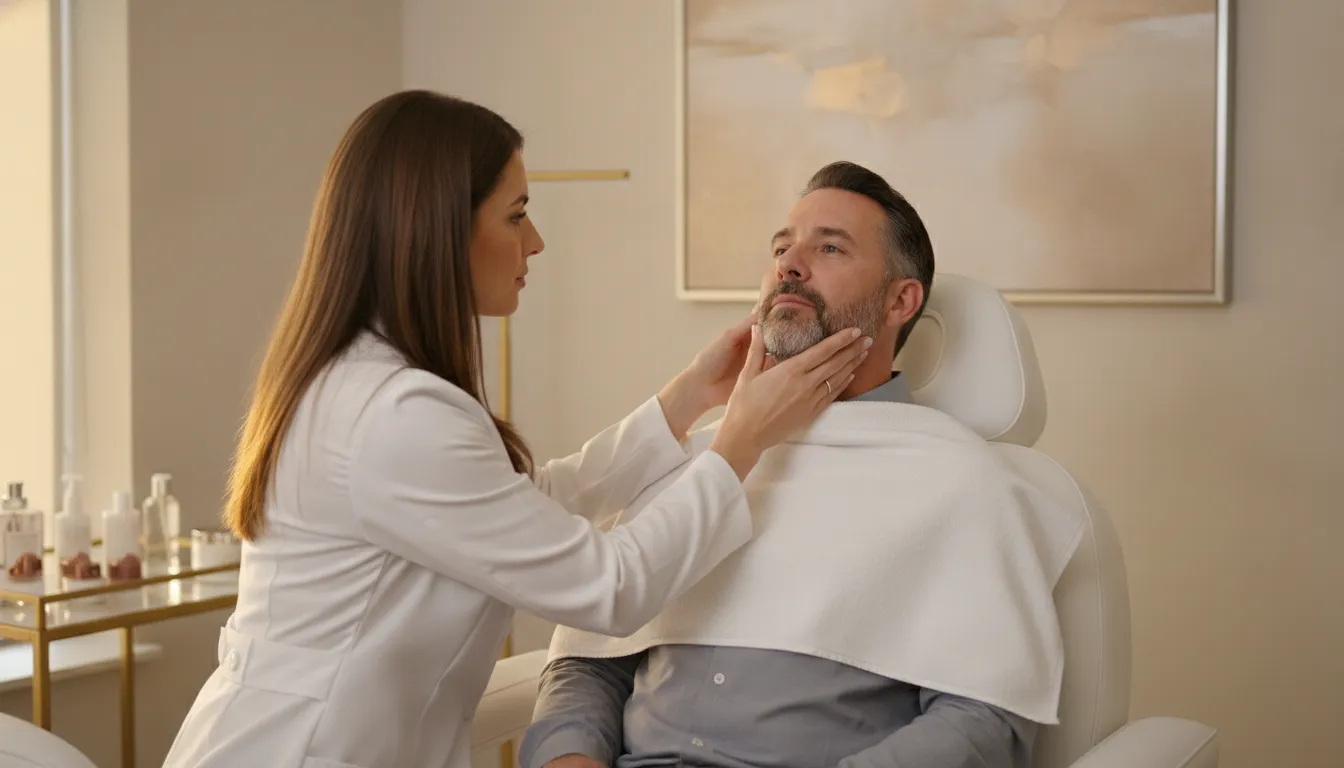
The first visit should establish whether the concern is appropriate for an aesthetic discussion and what structures contribute to it. The clinician may observe the neck at rest and while you activate the muscles, ask about prior treatments and relevant medical history, and discuss medicines, allergies, and any conditions that could affect care. Be candid about previous injections, procedures, and your expectations.
Questions worth raising include whether the bands are primarily dynamic, whether skin laxity or another concern is also present, and whether a proposed treatment addresses the feature that bothers you. Assessment also provides an opportunity to discuss alternatives, limitations, possible adverse effects, and the possibility that no treatment is recommended. A responsible plan should not promise that bands will disappear or that results will be identical for every patient.
Artisan describes its care as individualized and physician-led. Its injectables information provides context about the practice’s injection services, while a direct conversation is needed to determine whether a specific option is appropriate for your neck. Dr. Ramin R. Samadi is identified as medical director and is assigned by the practice to specified injectable services; do not assume that this means every listed service is performed by him.
What treatment might be discussed?
For selected patients with visible vertical bands associated with platysma activity, a clinician may discuss a neuromodulator injection. The aim, when appropriate, is to reduce targeted muscle activity. The evidence and suitability depend on the individual and the exact concern; a treatment discussion is not a diagnosis or a guarantee of a particular cosmetic change. The research review on platysma prominence and onabotulinumtoxinA describes it as a minimally invasive option studied for reducing visible vertical neck bands. A review does not establish that treatment is suitable for every patient or that outcomes are assured.
Other concerns may need a different conversation. A filler, skin-focused service, or another approach should not be presumed to improve every kind of neck band. If the main concern is loose skin, horizontal lines, or under-chin fullness, ask the clinician to explain whether that is separate from the vertical bands and what options, if any, address it. Artisan’s dermal filler information and hyperdilute Radiesse information describe other services, but their presence on a website does not mean they are indicated for your particular neck concern.
How do the options compare?
The following table is a discussion aid, not a treatment recommendation. Availability, candidacy, and the details of care must be confirmed with the practice and clinician. There is no treatment price listed here because Artisan’s treatment rates are not established in the supplied information.
Concern or approach | What it may address | What to clarify |
Assessment first | Helps distinguish muscle bands from skin changes, creases, or fullness | What is contributing to the appearance, and is further medical evaluation needed? |
Neuromodulator discussion | May be considered for selected visible bands associated with muscle activity | Expected degree and timing of change, risks, suitability, and follow-up |
Skin-focused discussion | May be relevant when skin texture or other surface concerns are part of the picture | Whether the service addresses the specific concern and what evidence and recovery apply |
No treatment or referral | May be the appropriate choice when treatment is unsuitable or the concern needs another evaluation | What alternatives are sensible and when to seek additional care |
What should you ask about benefits and limitations?
Ask the clinician to describe the intended change in ordinary terms. Which band or muscle is being targeted? What would a realistic improvement look like in your case? Could the appearance remain partly visible, or might the concern return over time? How will you judge whether the plan helped? Answers should be specific to the assessment, not a blanket promise.
Ask how long a change might take to become apparent and how long it may last, while recognizing that response and duration vary. Ask whether more than one visit could be considered and what would prompt reassessment. Do not treat a general duration statement as a prediction for you. If a clinician cannot explain why a proposed intervention fits the source of the bands, ask for clarification before deciding.
It is also reasonable to ask about options that do not involve injections, the consequences of waiting, and the possibility that treatment will not achieve your desired appearance. A consultation should leave room to decline, ask for time, or seek another qualified opinion. The goal is an informed decision, not pressure to proceed on the day of assessment.
What risks and recovery questions matter?
All medical procedures have potential risks. A neuromodulator injection can cause temporary local effects, and effects outside the intended area or other complications may be possible. The precise risk discussion belongs with the treating clinician, who can explain the product, injection plan, your health history, and what to do if an unexpected symptom occurs. Do not rely on claims that an injection is painless, risk-free, or appropriate for everyone.
Ask what you may notice immediately afterward, what activities or care instructions apply, and which symptoms should prompt a call or urgent medical attention. Confirm whom to contact and how follow-up works. Recovery and visible effects are treatment- and patient-dependent, so avoid planning around a universal downtime estimate. Share any upcoming event or travel date during the consultation rather than assuming the timing will suit it.
If the neck appearance is accompanied by a new lump, sudden swelling, pain, difficulty swallowing or breathing, or another concerning change, seek appropriate medical evaluation rather than treating it as a cosmetic issue. Urgent symptoms warrant timely medical care.
How can you prepare for a consultation in Fort Worth?
Before an appointment, note what you see and what matters most to you. If the bands appear only with certain movements, explain that. You may bring photographs that show the concern in ordinary lighting, but they are discussion aids, not a substitute for examination. Prepare a current list of medicines, supplements, allergies, relevant health conditions, and prior aesthetic treatments.
Describe when you first noticed the bands and whether their appearance changes with movement.
Identify your main goal: a softer appearance, clarification of the cause, or information about options.
Ask which findings support the suggested approach and what alternatives exist.
Discuss possible side effects, recovery, follow-up, and what to do if you have a concern.
Ask for the total plan and any costs directly; do not infer treatment rates from unrelated retail products or policy fees.
Artisan’s office is at 6015 Harris Parkway, Suite 110, Fort Worth, Texas 76132, and the practice lists visits by appointment. Its team page can help you learn about the practice, and its contact page is the direct route to ask about scheduling and the current consultation process. Confirm details with the office before making plans.
How should you evaluate a proposed plan?
A useful recommendation connects the exam findings to a clear goal. It explains why a specific option is being considered, what it can and cannot change, how risks apply to you, and how the clinician will assess the result. If the bands are only one part of your concern, the plan should separate the issues instead of treating the word “neck” as a single diagnosis.
Consider whether the plan fits your priorities, health circumstances, schedule, and tolerance for uncertainty. Ask what happens if you choose to wait or decide against treatment. You should understand whether the recommendation is a single intervention or a staged approach, what follow-up is expected, and how a change in symptoms would affect the plan. A detailed explanation is more useful than a promise of a fixed outcome.
Do not compare options solely by a before-and-after image or an advertised label. Images can differ in lighting, posture, camera angle, expression, and timing. They may not show what a typical patient can expect. Your own assessment and a discussion of variability are more relevant to deciding whether to proceed.
What details can change the assessment?
Neck anatomy is not identical from one person to another. Band visibility may differ between relaxed posture and active contraction, and the degree of asymmetry can matter. A clinician may ask you to turn your head, speak, or tense the neck briefly to understand when the cords become apparent. These observations help frame the conversation; they do not by themselves establish that an injection is appropriate.
Skin texture and elasticity can affect how the surface appears, while the contour below the jaw can create a separate concern. A patient may describe all of these changes as “neck bands,” although each may have a different cause. Be as precise as you can about the area and the moment that draws your attention. If the concern is more noticeable in photographs than in a mirror, mention the difference and bring representative images if helpful.
Medical history also matters. Tell the clinician about prior neck or facial procedures, neuromuscular conditions, swallowing or breathing issues, allergies, medicines, supplements, and any change in your health. Do not stop prescribed medication to prepare for a cosmetic appointment unless the prescriber instructs you to. The clinician can explain whether a health factor changes the assessment or requires another conversation before treatment.
How can you think about timing?
There is no need to rush a decision because a treatment is available or because a date is approaching. If you are considering care before a wedding, work event, or trip, mention the date early. The clinician can explain the expected timing and uncertainty for the option under discussion, including whether an appointment near an important event is sensible. A procedure should not be scheduled on the assumption that every patient responds in the same way.
For a first visit, reserve time to discuss goals and questions rather than expecting a procedure to happen immediately. The assessment may reveal that your concern differs from what you initially assumed, or that more information is needed. You can ask whether consultation and treatment are separate appointments, what preparation is advised, and how follow-up is arranged. Confirm the current process with the office because scheduling details may change.
Some people prefer to observe the area over time before deciding. If you take comparison photographs, use similar lighting, distance, camera angle, and facial posture. A set of carefully matched images can make a personal conversation more useful than comparing unrelated online photographs. Still, photographs cannot fully capture movement, touch, or the clinician’s examination.
How should you discuss expectations?
Try turning a broad wish such as “I want a younger-looking neck” into a specific concern. Do you want the bands to be less noticeable when the neck is activated? Are you concerned about how the area looks at rest? Is there a separate issue with skin texture or contour? The more clearly you describe the concern, the easier it is for the clinician to say whether the proposed plan addresses it.
Ask what a modest, meaningful improvement would look like and what features are unlikely to change. Ask whether the plan targets one part of the appearance while leaving other features untouched. A clinician should be able to explain uncertainty without dismissing your concern. If your hoped-for result requires a change that the proposed treatment cannot reliably provide, that should be clear before you decide.
It can help to agree on how you will review the outcome. Ask when a follow-up conversation would make sense, what the clinician will assess, and what would count as a reason to change course. Avoid assuming that a larger amount of treatment necessarily creates a better result. A treatment plan should be individualized and based on the examination, not on a generic dose or a social-media example.
How can you compare recommendations thoughtfully?
If you receive more than one recommendation, compare the reasoning rather than just the treatment names. Does each clinician explain the source of the bands they observed? Do they identify a realistic goal, explain limitations, and discuss risks in language you understand? Are they clear about who would perform the treatment and who handles follow-up? These are useful questions for any elective procedure.
You may ask for the proposed product or procedure to be identified and for an explanation of why it is being considered. Ask what other options exist, including no treatment, and whether there is a reason to seek evaluation from another medical professional. A recommendation should not rely on claims of guaranteed results, universal suitability, or an absence of risk. Take time to review information and ask follow-up questions if anything is unclear.
Price is one practical factor, but the lowest quoted amount alone does not tell you whether a plan is appropriate. Artisan’s supplied information does not establish treatment pricing. Ask the practice directly for current charges and what is included before making a financial decision. Do not treat a posted cancellation fee, retail product listing, or another practice’s price as the cost of neck treatment at Artisan.
What happens if treatment is not a fit?
A consultation can be useful even when no aesthetic treatment follows. The clinician may explain that the appearance is not primarily related to the muscle targeted by an injection, that another concern needs assessment, or that the likely change does not align with your expectations. Choosing not to proceed is a valid outcome of a consultation.
If a finding seems new or medically concerning, ask whether it should be evaluated outside an aesthetic setting. A cosmetic visit is not a substitute for urgent or primary medical care. The clinician can clarify the limits of the visit and whether another type of assessment is appropriate. Seek timely care for concerning symptoms rather than waiting for a cosmetic appointment.
If you are not ready to decide, ask what information would be useful and whether a later review is reasonable. You can take home the proposed plan, consider the risks and practical details, and return with questions. A patient-centered decision includes the option to pause.
What should you confirm with the practice?
Before booking, verify who will conduct the consultation, whether the clinician has time to examine the concern, and how the practice handles questions after a visit. Ask what information to bring and whether there are any appointment instructions. The website describes appointment-based care in Fort Worth; the office can confirm current availability and visit details.
At the visit, confirm the name and role of the person providing care. Ask how the treatment plan relates to the assessment and who to contact with a question afterward. If an injection is proposed, confirm what product is being discussed, where it would be administered, the intended effect, and the clinician’s specific instructions. These practical details support informed consent and help avoid misunderstandings.
Keep a copy of any written instructions and follow them as provided. If you notice an unexpected effect, use the contact instructions supplied by the practice or seek appropriate medical help depending on severity. Do not wait for a routine follow-up if symptoms are urgent.
What questions can help you keep the visit focused?
A consultation can cover more than one concern, so decide which questions matter most if time is limited. Start with the feature you want evaluated and ask the clinician to describe what they observe. Then move from the finding to the possible plan: why consider it, what might change, what may remain, and what risks or practical details matter for you.
What do you think is causing the vertical bands I notice?
Do they appear mainly with muscle contraction, or are other factors involved?
What is the specific goal of the option you are recommending?
What changes are realistic, and which parts of my concern may remain?
What risks apply in light of my health history and medicines?
What should I expect during recovery, and which symptoms need a call?
Who will perform the treatment and coordinate follow-up?
What are the current charges, and what services do they include?
What are the alternatives, including waiting or not treating?
Writing questions down can help you use appointment time well. If a response is unfamiliar, ask for plain-language clarification. You should understand the proposed care well enough to explain its purpose, important risks, and likely limits in your own words before consenting.
How can you make sense of a sample case?
Imagine two people who both call their concern “neck bands.” One notices narrow cords only when speaking or tightening the neck. Another is bothered by loose-looking skin and horizontal creases that remain visible when relaxed. Their descriptions use the same phrase, but the features they notice are different. A clinician would need to assess each person rather than apply one treatment plan to both.
For the first person, the assessment may include observing the neck both relaxed and activated and discussing whether muscle activity is contributing. If an injection is raised as an option, the person can ask what degree of change is realistic and what risks apply. For the second person, the clinician may explain that a muscle-focused approach might not address the primary concern, and discuss whether another evaluation or no treatment is more appropriate. These examples illustrate how questions can guide a visit; they do not predict a recommendation.
A third person may have bands that are newly apparent alongside swelling or discomfort. That situation should not be treated as an ordinary cosmetic question. The person should seek appropriate medical evaluation and explain the new symptoms. The distinction between a longstanding appearance concern and a new change is one reason to describe the timeline clearly during the first conversation.
What can you do between deciding and a follow-up?
If you choose to proceed, keep the written instructions and appointment details together. Make a note of the date and the changes you are asked to watch for. If questions arise, use the practice’s contact instructions rather than relying on informal advice from an online discussion. If a symptom seems urgent, seek appropriate medical care instead of waiting for a scheduled check-in.
If you decide to wait, you can still make the next conversation more useful. Record what you notice, including whether the bands appear with a particular movement or posture. Avoid changing several skincare or treatment variables at once if you are trying to understand what affects appearance, and do not use a home device or product near the neck on the assumption that it treats muscle bands. Ask a qualified clinician before trying an intervention that could affect the area.
At any later visit, update the clinician on changes in health, new medications, and any procedures received since the previous assessment. A prior discussion is not a permanent clearance for a later treatment. Your current circumstances and goals should be reviewed again before a procedure is planned.
Frequently asked questions
Can injections remove neck bands completely?
No outcome can be promised. A clinician may discuss reducing the appearance of selected muscle-related bands, but response varies and some visible structure may remain. Ask what degree of change is realistic for your anatomy.
Are all vertical neck bands caused by muscle activity?
No. Muscle activity can contribute, but skin changes and other factors may affect appearance. Examination at rest and during movement can help distinguish the possibilities.
Is neck band treatment the same as treating under-chin fullness?
No. Vertical bands and fullness below the chin are different concerns. A treatment intended for one should not be assumed to treat the other; discuss the specific area and goal with a clinician.
How long does a treatment result last?
There is no single duration that applies to everyone. If an injection is considered, ask the clinician how response and repeat assessment may vary for your case.
How do I find out whether I am a candidate?
A clinician must review your concern, health history, and goals before determining whether treatment is suitable. Contact the practice to ask about an assessment and the current appointment process.
Visible neck bands have more than one possible explanation, so a careful assessment and a candid discussion of options, limits, and risks are the practical starting points.


Comments