

IPL vs Chemical Peel: What to Ask First
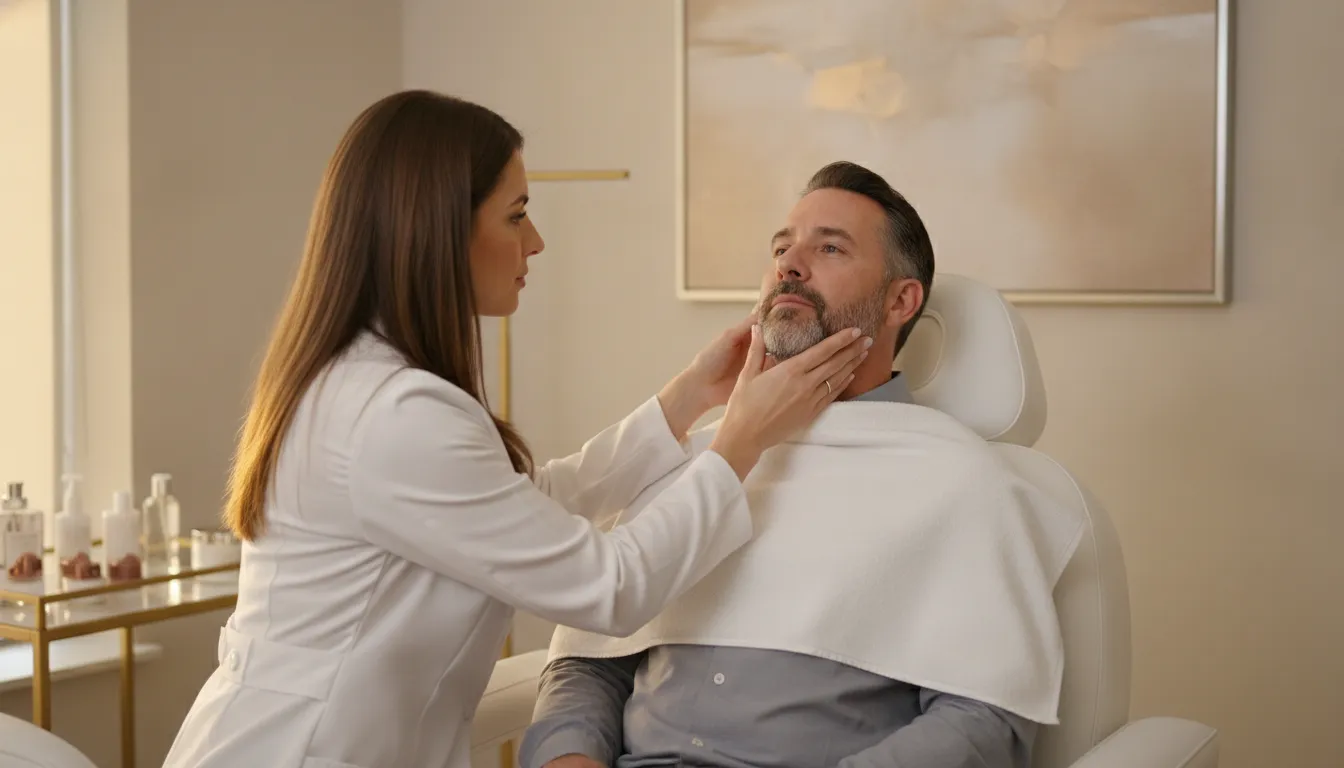
IPL vs chemical peel is a practical question when uneven color, sun spots, redness, or rough texture is the concern. The two names are not interchangeable. Intense pulsed light sends broad pulses of light into the skin. A chemical peel uses a solution to exfoliate selected layers. Artisan MedSpa, Laser & Wellness in Fort Worth advertises both approaches. Which one belongs in a plan, if either does, depends on your skin and a clinician's assessment.
Let's begin with a conversation
This guide explains how the two options differ, what the practice has published about each, and what to ask before you book. It does not name a device, a peel depth, or a result for you. IPL and peels are skin services, not a substitute for the practice's injectable treatments. The right next step is a visit at 6015 Harris Parkway, Suite 110. You can also review the practice's treatments before your assessment.
How IPL and a chemical peel differ
The American Academy of Dermatology lists intense pulsed light and chemical peels among options for age spots and sun-damaged skin. A dermatologist may still choose other treatments for the specific sign of damage. That pairing is why the comparison shows up so often. Both can be discussed for color and texture. They do not work the same way, and one is not a milder version of the other.
IPL is a light-based treatment. A handpiece delivers pulses of broad-spectrum light. Pigment and some visible vessels can absorb that light. The American Academy of Dermatology notes that laser and light treatments can be used for redness, visible vessels, age spots, and some scars. The same guidance says darker skin can carry a higher risk of burns or dark marks. Several sessions are often part of the plan. Downtime is often described as limited, and bruising is possible.
A chemical peel is a controlled exfoliation. The American Academy of Dermatology's peel guidance explains that depth changes the visit and the recovery. A light, "lunchtime" peel may leave redness for about one to seven days. A medium or deep peel can mean longer healing, swelling, blistering, or crusting. A deep peel is a surgical-level procedure. Some people are advised to do a series, sometimes three to five peels, rather than one visit.
A useful way to hold the difference:
- IPL aims light at color in the skin, such as brown spots or visible redness, without peeling away a layer the way an acid does.
- A peel removes or loosens surface cells. Lighter peels are often discussed for brightness and texture. Deeper peels reach further and need more aftercare.
- Neither name tells you the settings, the acid, the depth, or whether your skin is a candidate.
Artisan MedSpa, Laser & Wellness describes IPL on its Skin Repair page as a treatment for discoloration. Including red marks, dark spots, and blemishes, with sessions often lasting 15 to 45 minutes. The same page says the sensation can feel like a rubber-band snap and that pigment change usually takes more than one session. Its aesthetic services page lists chemical peels with facials, microneedling, and dermaplaning for concerns such as fine lines, acne, and uneven tone. Those are practice descriptions, not a promise that either service fits every face.
Which concern points toward which question
Start with the change you can see, then let the assessment decide. Searching "IPL vs chemical peel" usually means one of a few patterns. Matching the pattern to a question is more useful than matching it to a winner.
| What you notice | Question IPL raises | Question a peel raises | What still has to be checked |
|---|---|---|---|
| Brown spots or sun freckles | Could light target that pigment? | Could a peel lift stained surface cells? | Spot versus a lesion that needs a medical look first |
| Redness or visible small vessels | Is a light-based option being considered? | Will exfoliation help the color, or mainly the texture? | Rosacea or another diagnosis, and skin tone |
| Dullness or rough texture | Is color the main issue, or is texture? | Is a light peel the kind of exfoliation being discussed? | Recent treatments, retinoids, and sun habits |
| Acne marks or uneven tone | Is the mark pigment, redness, or both? | Is the goal smoother texture, clearer pores, or both? | Active breakouts and how your skin heals |
| You want both | Does one visit do both jobs? | Should a peel and IPL be separated in time? | Healing between visits, not a same-day stack by default |
Brown spots are the closest overlap. The Academy lists both IPL and chemical peels among treatments for age spots, and it also lists prescription retinoids, laser resurfacing, microdermabrasion, and cryosurgery. A med spa visit is not a substitute for a dermatologist when a spot is new, changing, bleeding, or irregular. Ask that question before you ask about cosmetic light or a peel.
Redness is where the methods diverge more clearly. Light-based treatment is often discussed because vessels and red pigment can absorb light. A peel may still be discussed for texture around that redness, but exfoliating inflamed skin is a separate judgment. Do not decide from a before-and-after photo that was not your skin tone.
Texture, dullness, and fine lines are where peels are commonly described. Artisan's skin-services copy says chemical peels exfoliate and renew skin and may be discussed for fine lines, acne, and uneven tone. That is a reason to ask about peel strength. It is not a reason to assume a peel is superficial, comfortable, or free of downtime.
Melasma needs its own caution. Pigment disorders can darken after heat, light, or peels in some people. If patchy facial pigment is the reason you are comparing treatments, read the practice's melasma treatment guide and bring that pattern to the visit instead of treating it like an ordinary sun spot.
What Artisan has published about each option
Use the practice's own pages as the source for what is advertised, and use the consultation for what is offered to you. The public site does not list a device model, a peel acid, a price, or a candidacy rule.
What the IPL page says
On the Skin Repair page, Artisan MedSpa, Laser & Wellness calls IPL an advanced light treatment for problematic discoloration. The page says it is used for red marks, dark spots, and blemishes, with an aim of a more even tone. Sessions often run 15 to 45 minutes based on the size of the area. It describes a rubber-band snap rather than lingering pain. It also says pigment usually changes across a series of sessions, because removal of color takes time.
The same page gives one concrete aftercare point: keep direct sun exposure minimal for about a week. It warns that sun on a treated area can lead to extra pigment and more damage. That is a planning fact, not a complete recovery sheet. Ask what sunscreen, makeup, exercise, and heat exposure mean for your own visit.
The page also groups IPL with the words "advanced laser treatment." Intense pulsed light is broad-spectrum light, not a single-wavelength laser. If you arrived by searching for laser skin treatment, say that in the consult. The team can tell you whether the visit you want is IPL, another light-based service, or something the practice is not currently offering. This article does not describe a laser hair-removal or laser-resurfacing menu.
What the peel and skin pages say
The aesthetic services page says a licensed aesthetician provides facials, chemical peels, microneedling with or without additives, and dermaplaning. It also mentions in-clinic care related to rosacea, birthmarks, skin tags, dark spots, blemishes, dryness, and discoloration. A related skin page says chemical peels are used to exfoliate and renew skin and may address fine lines. Acne, and uneven tone, and it invites readers to book a session with the aesthetician.
Those pages do not say which acids are used, how strong a peel is, how many visits are typical, or who is not a candidate. They also do not say that peels and IPL are performed by the same person. Injectable care at the practice is attributed to the medical director on other pages. Facials, peels, and light-based skin treatments should be asked about on their own, including who performs them.
If you have seen the phrase Foto Facial in local search, treat it as a label, not as a second IPL protocol. The practice's Foto Facial guide explains why the name does not identify a device. Use that article for the naming question, and use this one for the peel comparison.
What to expect from a visit and from recovery
Expect an assessment before a treatment plan. A responsible visit looks at the concern, your skin history, recent products, and how much downtime you can accept. It should not start with a coupon and a same-day decision.
For IPL, Artisan's published description is the closest local detail. A session may last 15 to 45 minutes, feel like a snap, and work better as a series than as one visit for pigment. The page also calls for about a week of careful sun avoidance. People often ask about temporary darkening of spots, redness, and swelling. Those reactions are possible with light-based treatment and are not guaranteed to be mild. The Academy notes a higher risk of burns or dark marks on darker skin, so skin tone is a screening question.
For peels, recovery tracks depth, and the practice has not published a depth. The Academy's public guidance is the right general frame. A superficial peel may mean a few days of redness. A deeper peel can mean one to two weeks of healing, dressings, and follow-up, and it is not a lunchtime service. Side effects can include longer redness, temporary dark or light patches, and, rarely, scarring. Risk goes up with sun, poor wound care, scratching, makeup too soon, or tanning while you heal.
Bring a short history so the recommendation is based on you:
- Name the concern in plain words, such as brown spots on the cheeks, redness around the nose, or rough texture on the chin.
- List recent peels, light treatments, microneedling, waxing, and self-tanner.
- List retinoids, acids, acne medicines, and any isotretinoin history.
- Say whether you have ever darkened or scarred after a procedure or after sun.
- Say how many days you can be visibly red or flaking.
Ask for the plan in writing enough to compare it later: the service name, who performs it. The area, the expected number of visits, and what "healing" means before the next one. If the answer is that your skin should be seen by a dermatologist first, that is a useful result, not a failed consult.
Can you combine IPL and a chemical peel?
Combining them is a timing question, not a default package. A peel disrupts the surface while it exfoliates. Doing a peel to "prep" the skin on the same day as IPL is not a neutral step. Irritated or freshly peeled skin can change how light is absorbed and how you heal.
Ask whether the two should be separated by days or weeks, which one comes first for your concern, and what products to pause. Also ask what happens if you are still pink or flaking when the next visit arrives. A series can be appropriate. A same-day stack should be justified for your skin, not assumed because both names appear on a menu.
The same caution applies to microneedling, which Artisan also advertises. If texture is the main goal, you may be choosing among a peel, microneedling, and IPL rather than stacking all three. The RF microneedling recovery guide covers a different procedure and its healing questions. It is not an IPL aftercare sheet, but it is a reminder that recovery is procedure-specific.
Sun care sits in every version of the plan. Artisan's IPL page already flags a week of limited direct sun. The Academy's peel guidance tells patients to moisturize and wear daily sunscreen, and to avoid tanning during recovery. Fort Worth sun makes that instruction practical. A treatment that fades spots can also leave skin more able to darken if you go straight back outside without protection.
How to compare options without chasing a guarantee
Compare the fit, not a promised shade of improvement. Artisan does not publish a price for IPL or for peels, and this guide will not invent one. A higher price is not proof of a better plan, and a lower price is not proof that the peel is gentle.
Use the same questions for any Fort Worth provider:
- What concern are you treating, and what are you not treating?
- Is the recommendation IPL, a peel, both separated in time, or neither?
- What product or device is used, and who performs that part of the visit?
- What can healing look like for someone with your skin tone?
- How many visits are typically discussed, and what would make you stop?
- What aftercare and sun limits apply before you judge a result?
Read skin-tightening or facial-rejuvenation claims carefully. A peel or IPL visit is not a surgical lift and not a filler plan. If volume loss or etched lines are the real concern, the more relevant pages may be dermal fillers or the practice's non-surgical facial rejuvenation overview. Those are different tools. They should not be blended into an IPL or peel promise.
Keep the medical boundary clear. Artisan MedSpa, Laser & Wellness can assess whether an advertised skin service is appropriate to discuss. A changing spot, a scarring history, or a diagnosis such as melasma may need a physician's read before any cosmetic series. Effects, recovery, and duration vary by person and by treatment. Nothing on this page means a result is guaranteed, painless, or free of downtime.
Call 817-423-5400 to request an assessment
Frequently asked questions
Is IPL the same as a chemical peel?
No. IPL uses pulses of broad-spectrum light. A chemical peel uses a solution to exfoliate skin. They are sometimes discussed for similar concerns, such as dark spots or uneven tone, but the sensation, the visit, and the recovery are different. The right question is which one, if either, fits your skin.
Does Artisan MedSpa, Laser & Wellness offer both?
The practice advertises IPL on its Skin Repair page and chemical peels on its skin-services pages. Advertising is not the same as a confirmed plan for you. Ask which service is currently booked, who performs it, and whether your concern is a candidate. Do not assume a specific laser device is part of that visit.
How many sessions should you expect?
Artisan's IPL description says pigment usually improves across multiple sessions, not one visit, and that a session may last 15 to 45 minutes. The Academy notes that some peel plans use a series, such as three to five peels, while a deeper peel is a different procedure entirely. Your interval depends on healing, not on a fixed package.
Can you do IPL and a peel on the same day?
Do not plan on that unless the clinician explains why your skin can tolerate it. A peel leaves the surface disrupted. Many plans separate light treatment and exfoliation so skin can recover. Ask what to pause, how long to wait, and what pink or flaking skin means for the next appointment.
Who should wait before either treatment?
Bring up a history of dark marks or scarring after procedures, recent isotretinoin, active skin infection, pregnancy questions, and any spot that is new or changing. Darker skin needs an explicit risk talk before light treatment. If the answer is to see a dermatologist first, wait.
If you are weighing IPL against a chemical peel, start with the concern you can point to and the downtime you can accept. Artisan MedSpa, Laser & Wellness can walk through what is advertised and whether an assessment is the right next step. Let's begin with a conversation. Call 817-423-5400 or use the contact form.